Microcystin Data
Weekly microcystin toxin report
Summer 2026
If you already signed up for our microcystin toxin update emails, thank you! We’ll send reports to your inbox May-August. If you haven’t, what are you waiting for? They will remind you to check this page to see which lakes have microcystin detected, and at what levels.
Supported by the K21 Health Foundation, we sample 16 lakes and seven public beaches every week from June-August, and 14 streams biweekly year-round. Visit these excellent and educational resources to learn more about blue-green algae:
Week 10 Results: July 24
IDEM’s safety threshold is 8.0 ppb for humans and 0.8 ppb for pets.
ND – None Detected
– – – Data unavailable for this sampling week
| Lakes | Concentration (ppb) |
|---|---|
| Beaver Dam Lake | 3.219 |
| Yellow Creek Lake | 0.238 |
| Silver Lake | 2.101 |
| Winona Lake | 0.274 |
| Center Lake | 0.192 |
| Pike Lake | 0.193 |
| Big Chapman Lake | 0.307 |
| Big Barbee Lake | 0.522 |
| Webster Lake | ND |
| Lake Tippecanoe | 0.275 |
| James Lake | 0.204 |
| Oswego Lake | 0.248 |
| Dewart Lake | 0.979 |
| Waubee Lake | ND |
| Lake Wawasee* | 0.761 |
| Syracuse Lake | 0.449 |
*See spatial variability results below.
| Beach | Concentration (ppb) |
|---|---|
| Center Lake Beach | ND |
| Pike Lake Beach | ND |
| Syracuse Lake Beach - Lakeside | 0.536 |
| Syracuse Lake Beach - Hoy | 0.642 |
| Waubee Lake Beach | ND |
| Webster Lake Beach | ND |
| Winona Lake Beach | ND |
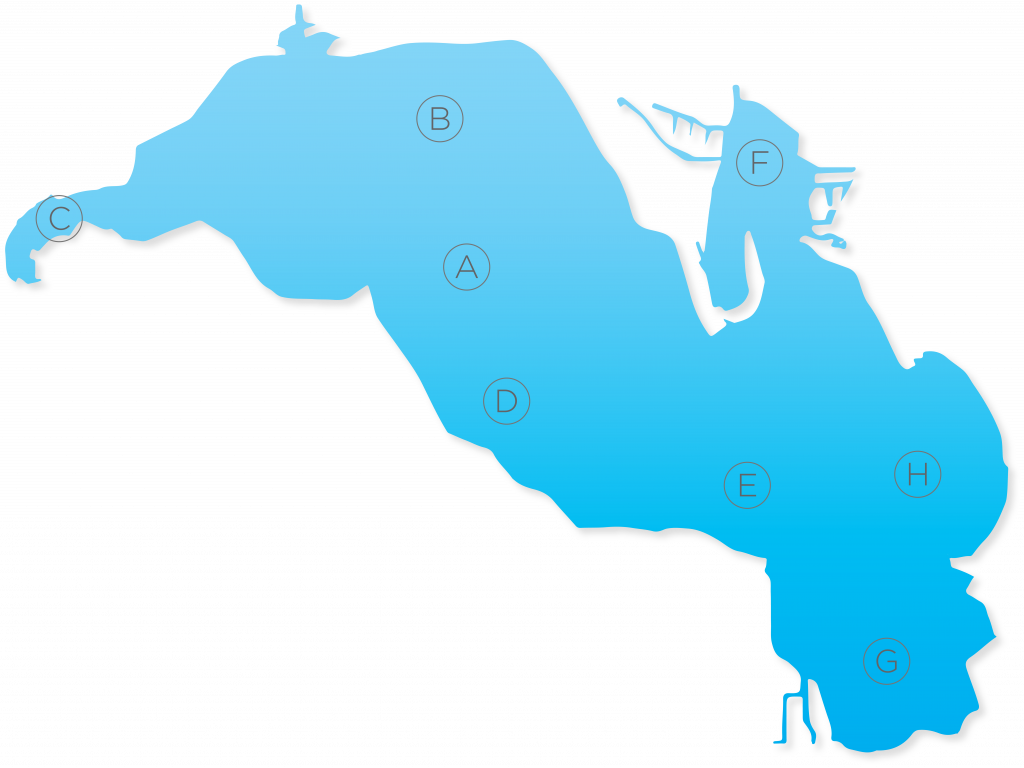
Additional sampling on Lake Wawasee
Thanks to the support of two generous Lake Wawasee families, the Lilly Center samples seven additional sites on Lake Wawasee during the summer of 2024. All water samples from these sites were tested for microcystin.
IDEM’s safety threshold is 8.0 ppb for humans and 0.8 ppb for pets.
ND – None Detected
– – – Data unavailable for this sampling week
| Letter | Name | Concentration |
|---|---|---|
| A | Deepest Point | 0.761 |
| B | North Shore | 0.505 |
| C | Conklin Bay | 0.326 |
| D | South Shore | 1.236 |
| E | Sandbar | 0.675 |
| F | Johnson Bay | 0.468 |
| G | Jarrett's Bay | 1.061 |
| H | Crow Bay | 0.718 |
What's next?
Every October, we publish Beneath the Surface, a report on our summer research as compared to the two previous years.
The 2025 edition includes a spread dedicated to blue-green algae (and microcystin) analysis! If you’re curious about what we learned over the course of the summer, make sure to grab a digital copy.
Why & how the Lilly Center samples for microcystin
From June-August, the Lilly Center collects water samples from open water on Kosciusko County’s 12 all-sport lakes and Center, Pike, Waubee, and Silver lakes, along with public swimming beaches at these lakes:
- Center
- Pike
- Syracuse
- Waubee
- Webster
- Winona
Samples are processed and analyzed for microcystin, a toxin produced by blue-green algae. If ingested or left on the skin for too long, microcystin can cause health problems for people and pets. It’s especially dangerous for animals, like dogs.
Toxin results are updated on this page every week during the summer. To learn more about microcystin and pet and human health, visit our blue-green algae research hub!
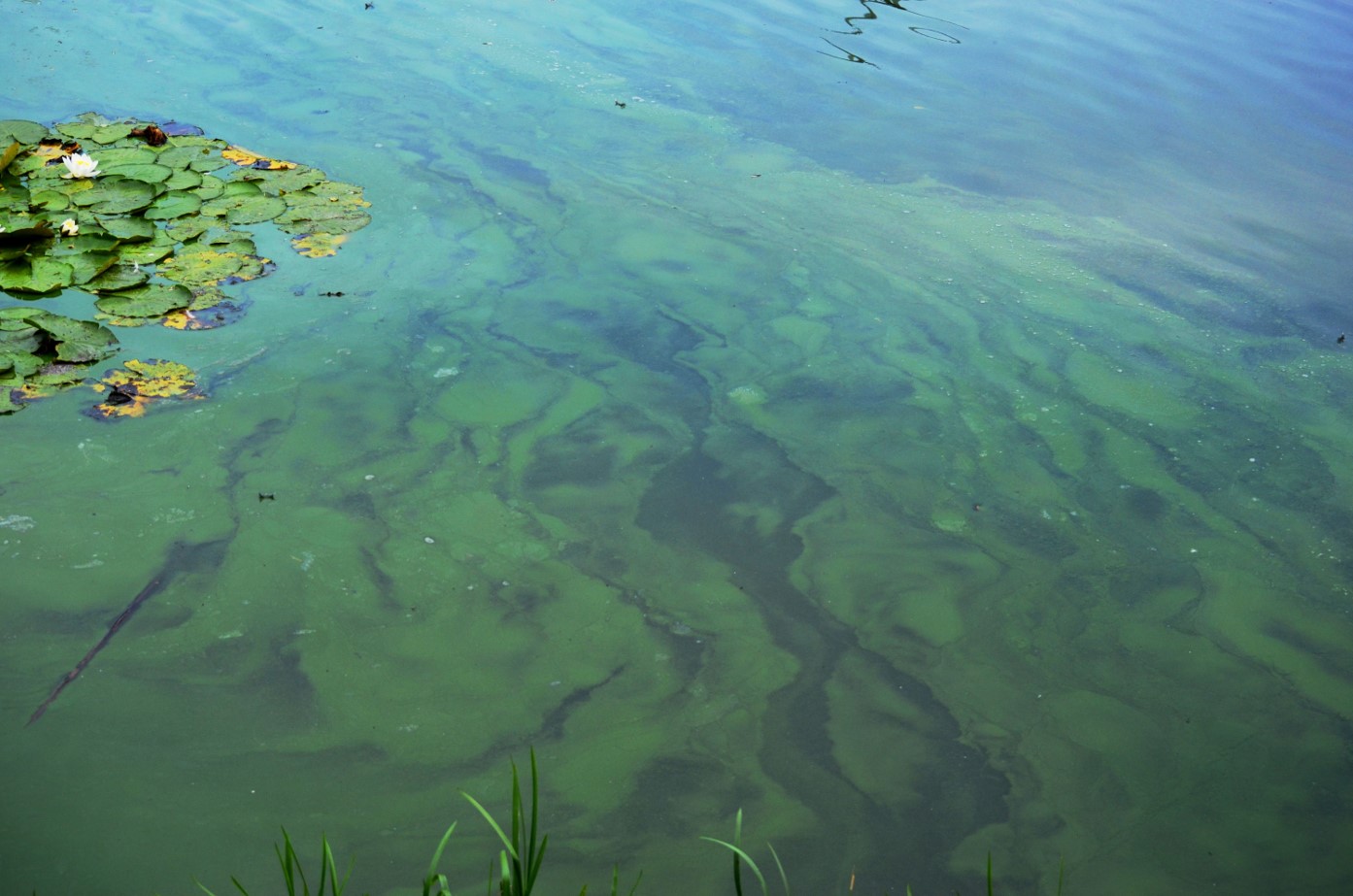
As a general guideline, don’t recreate in water that has a blue-green algae bloom! Blooms often look like a green paint slick on the surface or a pea-soup appearance. If you see a bloom (or aren’t sure if it’s a bloom) email us the date, time, location and a picture and a team member will follow up with you.
Collaboration with IDEM
Lilly Center algae sampling and analysis are coordinated with the Indiana Department of Environmental Management (IDEM) to ensure statewide data comparison and accuracy.