Lake Rx: A Prescription for Healthy Lakes
This page was updated on June 19, 2026.
Since 2007, the Lilly Center has created innovative educational programs and conducted applied research on local lakes. The research reveals the issue: an overabundance of nutrients, like phosphorus and nitrogen.
These nutrients feed harmful blue-green algae, encourage weed growth, and even contribute to unsafe E. coli levels. These threats are serious, as evidenced by Grand Lake St. Mary’s in Ohio. If left unattended, these problems will have a negative impact on the economy, recreation, and human health.
Research also shows that local lakes contribute more than $400 million annually to Kosciusko County’s economy. Healthy lakes increase business, tourism, employee retention, home values, and quality of life.
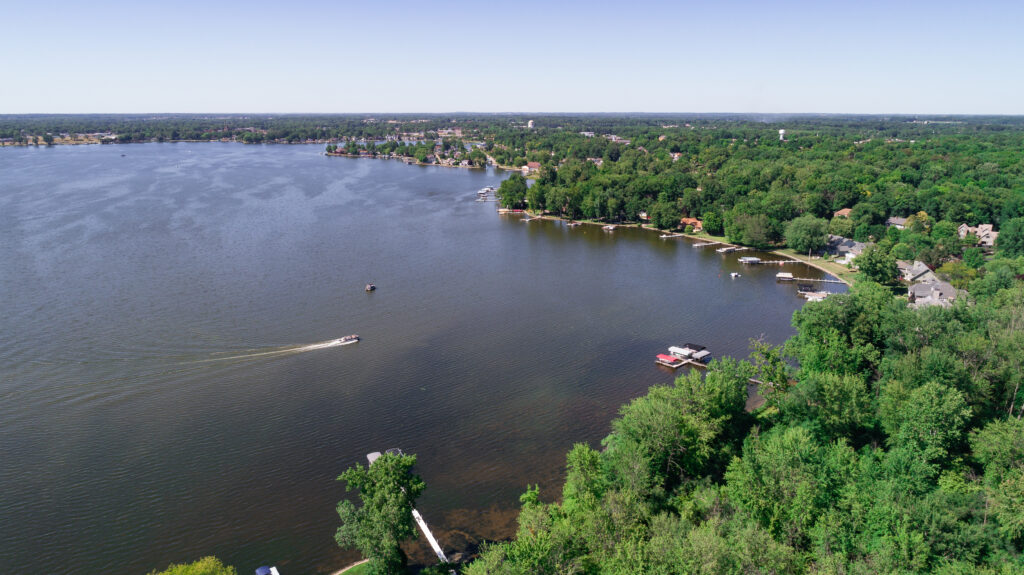
Imagine a future where your family enjoys the lake without worrying about blue-green algae toxins, harmful algae blooms are a thing of the past, the water is clear and healthy, and your community is thriving. The Lilly Center has a plan to create such a future.
What is Lake Rx?
Lake RX™ is a new initiative that creates custom prescriptions for individual lakes. Each prescription contains a combination of several scientifically-backed solutions. Through Lake RX, the Lilly Center will increase its focus on the most strategic solutions.
Lake health projects fall into three categories:
- Solutions on land: agricultural best practices, wetland revitalization
- Solutions in the water: blue-green algae research, ecosystem rebalancing, weed management
- Solutions in the community: water literacy, responsible boating, native shorelines
A Shared Vision for Healthy Lakes
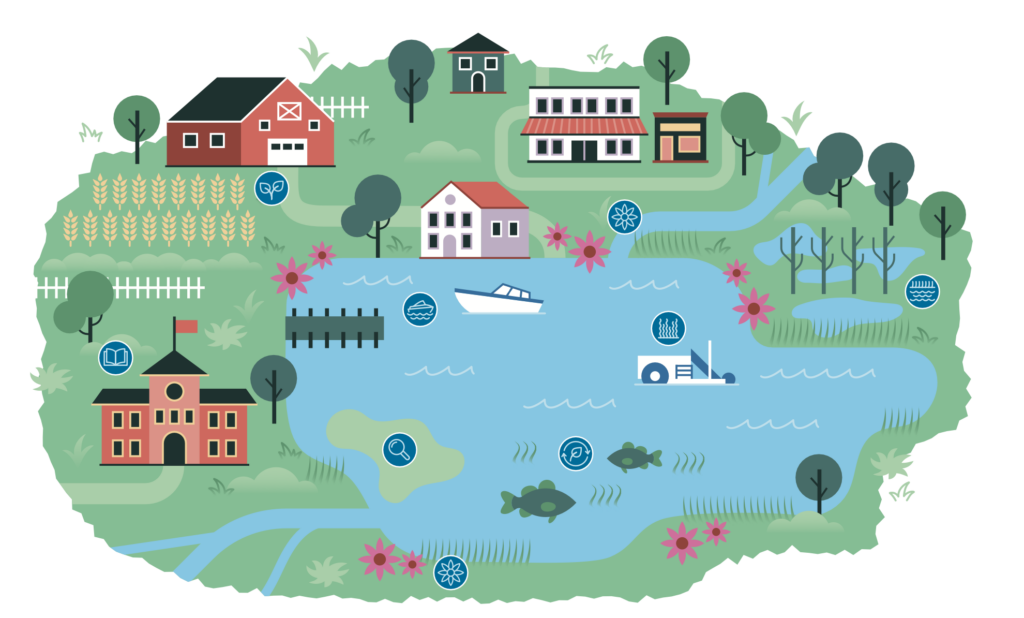
Tap the buttons below for a visual look at the components of a thriving lake community and the solutions that will help us achieve that shared vision.
Lake Rx Solutions
Use the buttons below to explore the unique solutions that could be part of a Lake RX prescription for your lake.
Solutions on Land
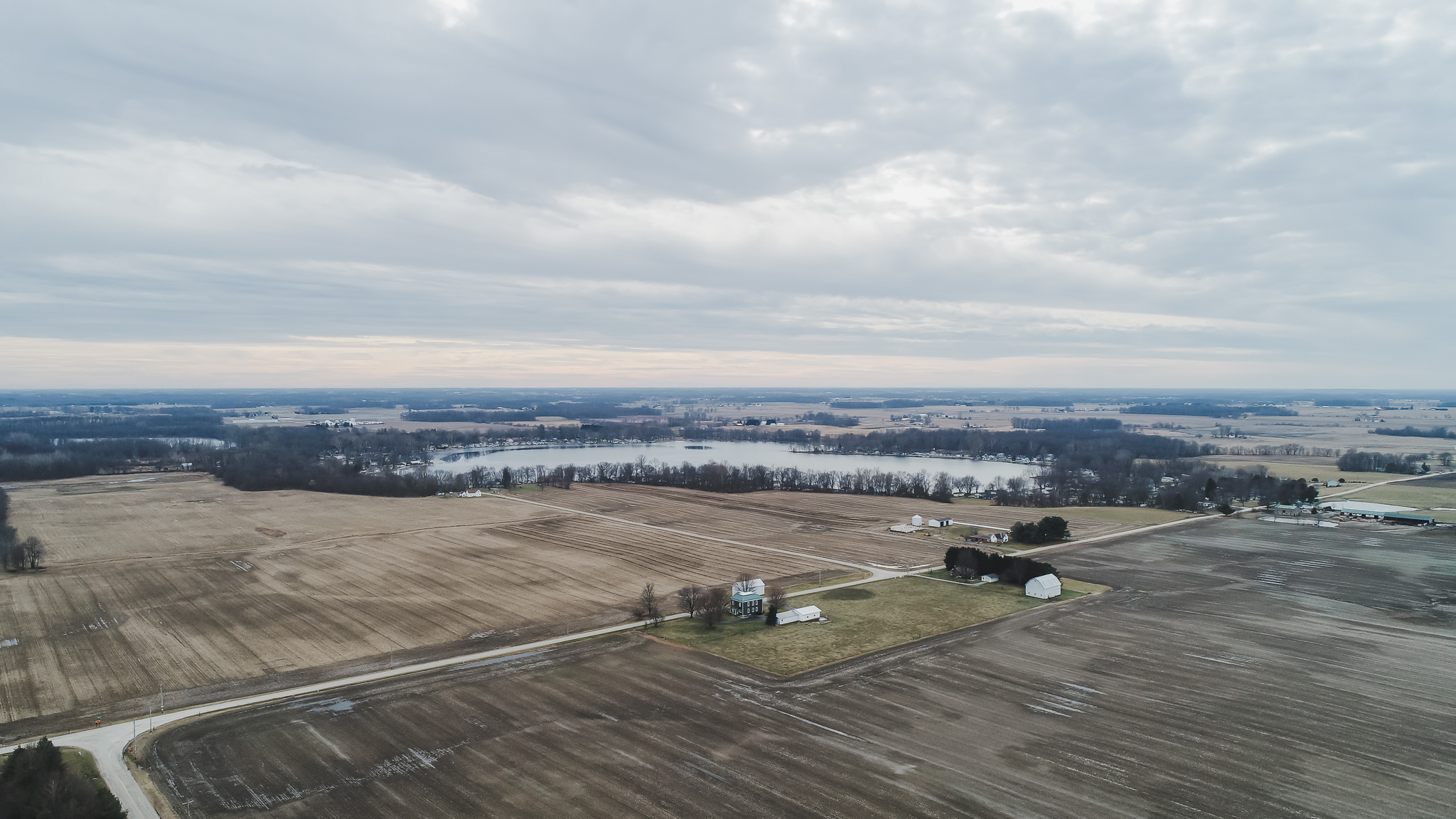
Agricultural producers are key partners to the health of the lake thanks to their outsized influence on a lake’s watershed in Kosciusko County. Over 80% of the land surrounding local lakes is agricultural. By identifying the agricultural practices with the best “bang for buck,” the Lilly Center will encourage implementation of proven best management practices (BMPs) that are beneficial to the producer and to the lakes. The Lilly Center’s director, Dr. Nate Bosch, serves on the science assessment committee as part of the Indiana Department of Agriculture. Dr. Bosch, alongside researchers from IU, Notre Dame, and Purdue, is working to quantify the impact of BMPs and create a recommended approach.
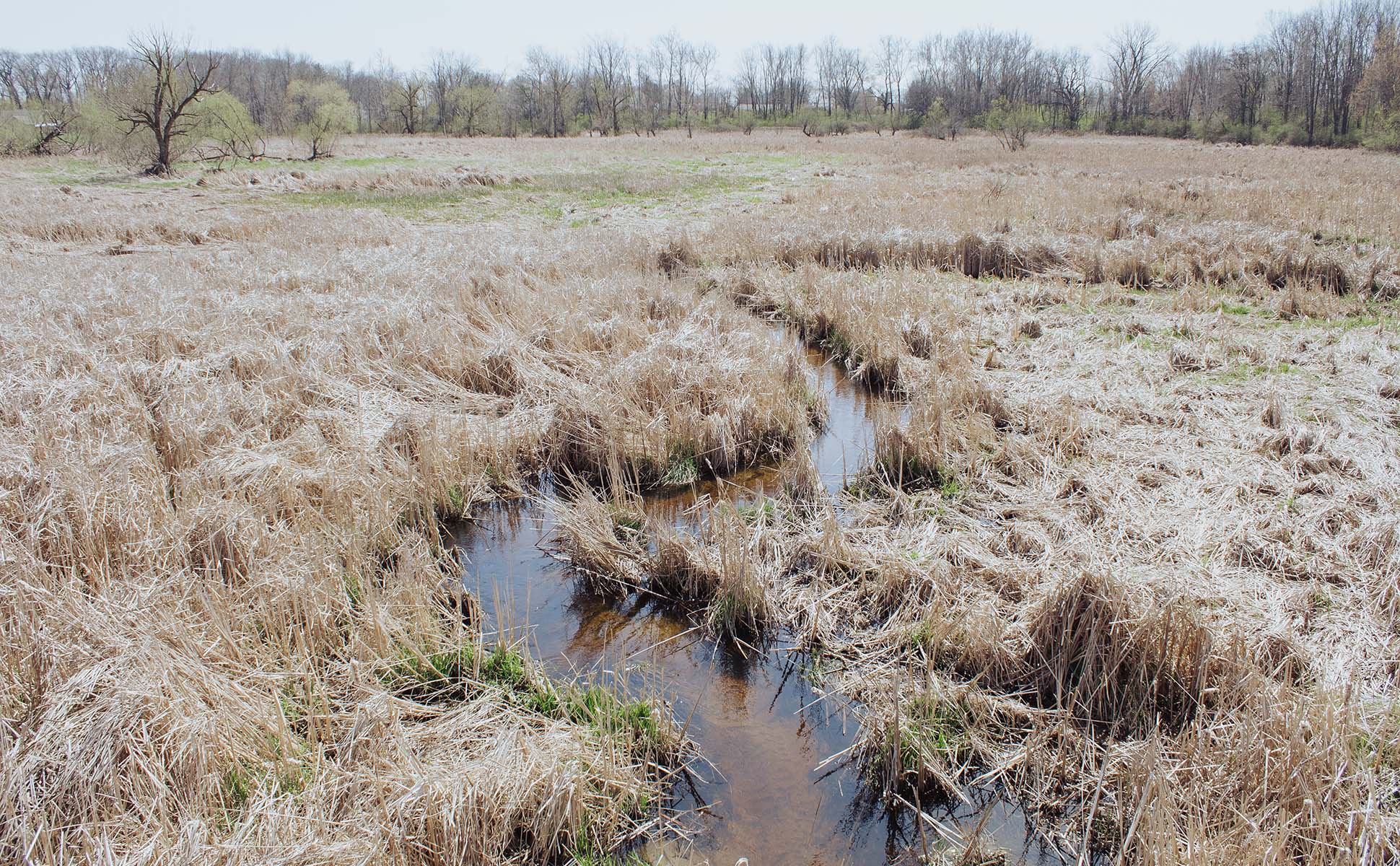
Indiana was once home to thousands of acres of wetlands. Today, only 15% of the original wetlands remain. Kosciusko and Noble County have over 6% of the existing wetland acres. Wetlands are important ecosystems that are often found next to lakes and streams and act as “kidneys,” filtering pollutants out of the water before that water reaches a local waterbody. The Lilly Center is assembling a group of wetland engineers, consultants, and scientists to assist in assessing current wetlands and identifying wetlands with the most potential for filtration and lake impact. Studies conducted in Ohio at Grand Lake St. Mary’s show a significant reduction in blue-green algae toxins as a result of constructed wetlands near stream inflows around the lake.
Solutions in the Water
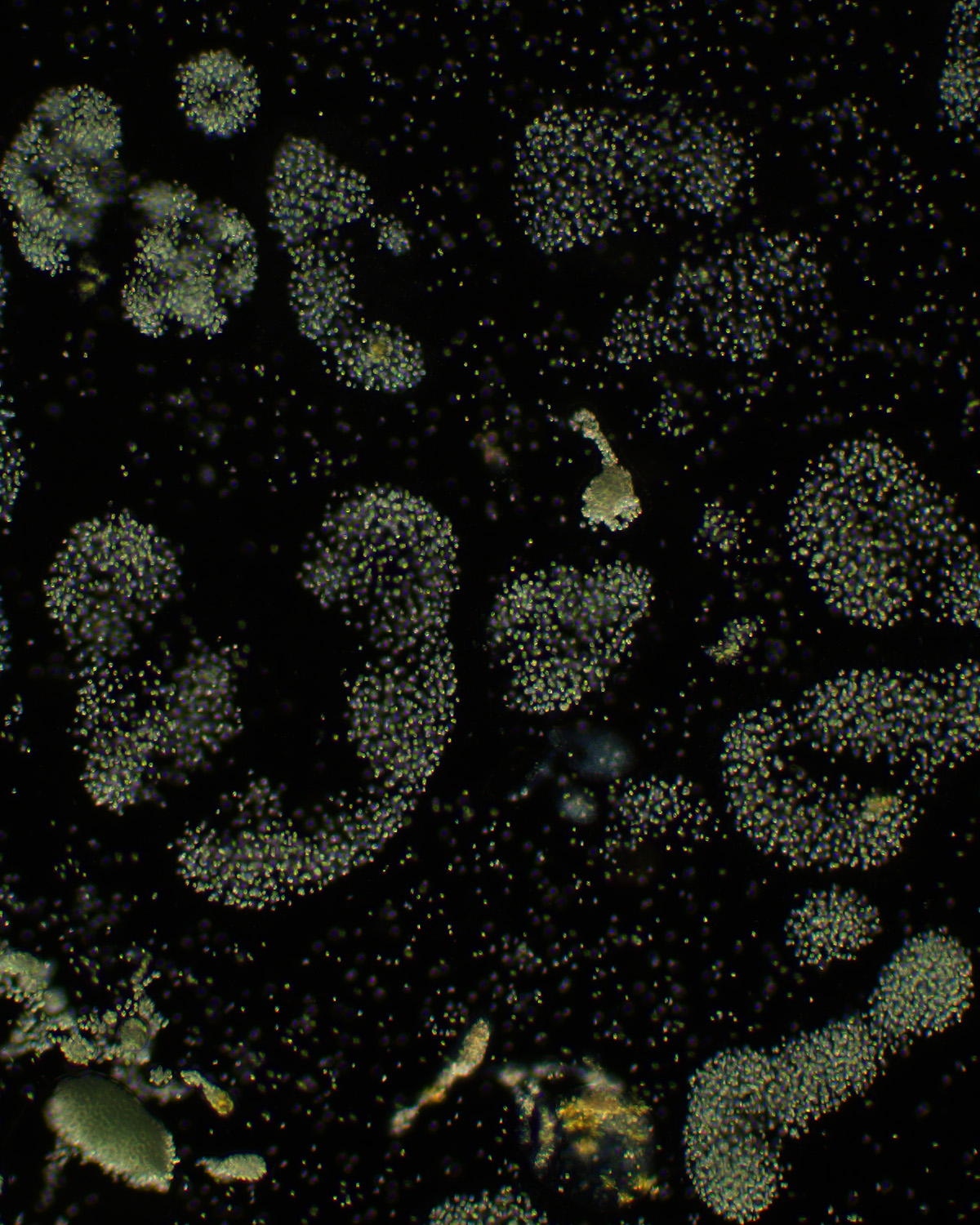
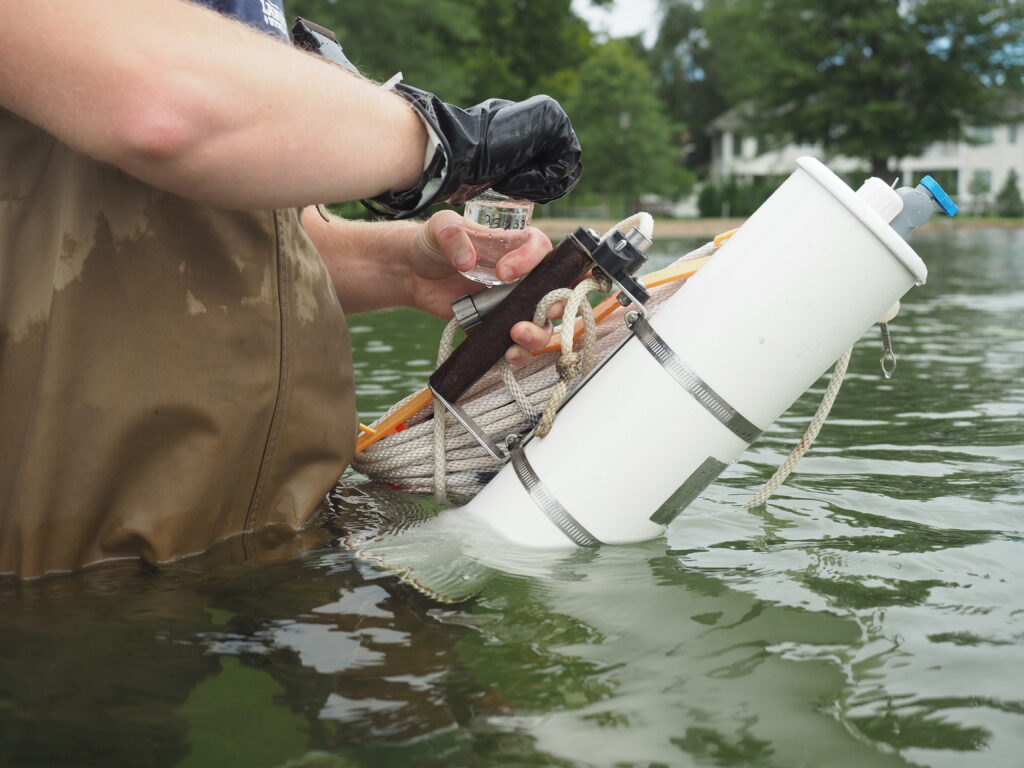
Over the last 15 years, the Lilly Center has conducted research on blue-green algae on 12 all-sport lakes (since 2012) and added more lakes in 2015 and 2023 for a total of 16 lakes. At each lake, the Lilly Center’s research team conducts toxin analysis and collects algae data that is analyzed in the Lilly Center’s lab. Lake RX will spur this effort for greater impact by increasing the analytical capabilities to find trends and connections between algae populations and the toxins produced. Through this research, the Lilly Center will look to predict and eventually prevent harmful algae blooms, making recreation safe for people and their pets.
Invasive species such as zebra mussels pose a threat to a lake’s ecology by outcompeting native mussel species. But they also pose a human health threat thanks to their diet. Zebra mussels choose to feed on non harmful species of green algae and filter out harmful blue-green algae species, unnaturally skewing a lake’s ecosystem to contain far more blue-green algae than other species. Up to 85% of the algae species in Kosciusko County’s lakes are made up of blue-green algae. The Lilly Center will partner with the Indiana Department of Natural Resources (IDNR) to explore options that would reduce the populations of zebra mussels and restore a balanced lake ecosystem.
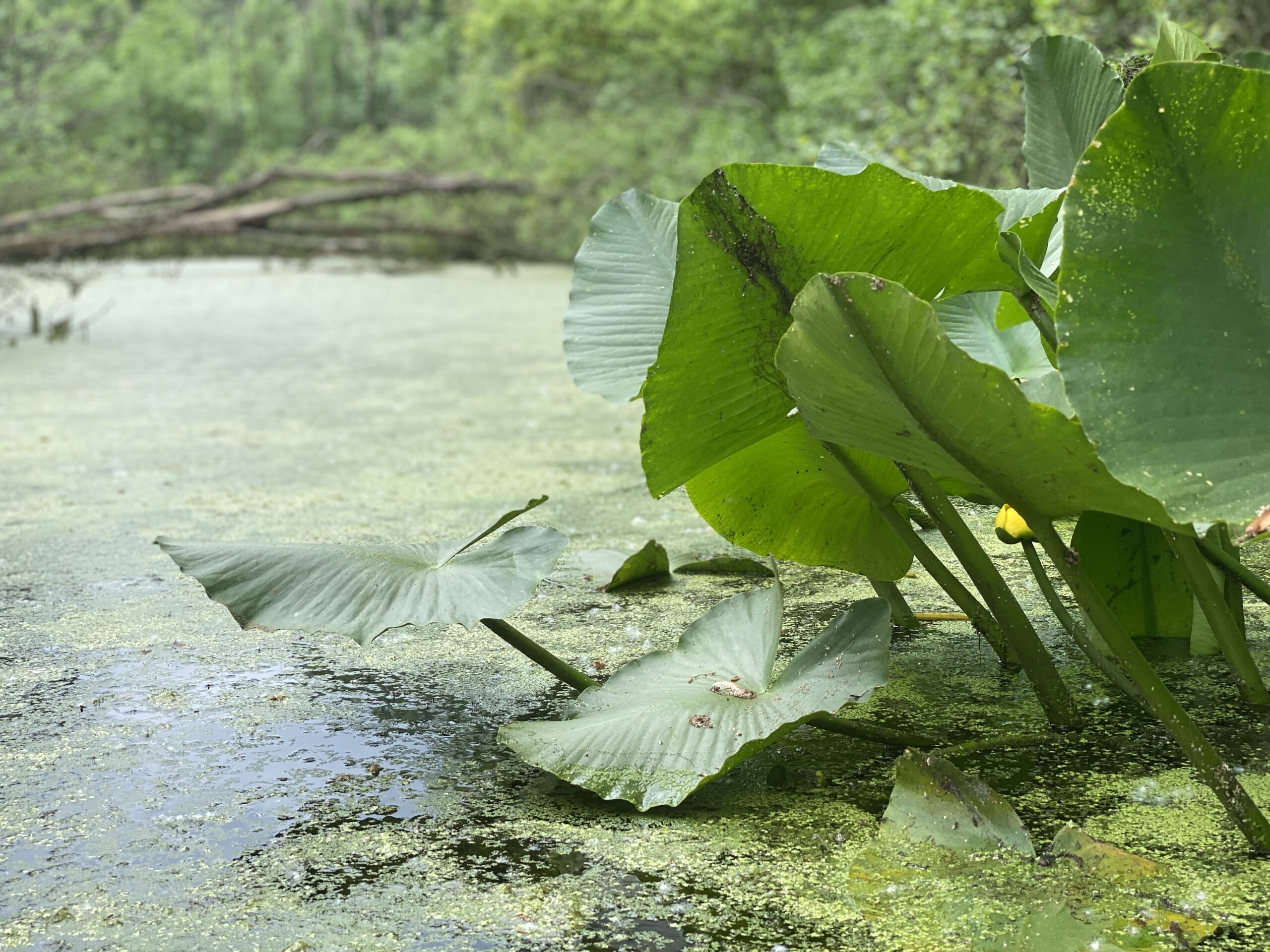
Aquatic plants, scientifically known as aquatic macrophytes, are a natural component of a lake’s ecosystem. Aquatic plants serve the lake by providing habitat for aquatic creatures, holding soil in place, and consuming nutrients in the water (and making them unavailable for consumption by algae). Too many aquatic plants can impede boat recreation and swimming, making the lake inaccessible for the community. Mechanical harvesting, common in Michigan, Wisconsin, and Minnesota, is an alternative to chemical-based solutions. Harvesting aquatic plants from a lake completely removes nutrients that otherwise would be available to algae during a plant’s lifecycle. Harvested plant material can be composted or offered to farmers as a free form of fertilizer.
Solutions in the Community
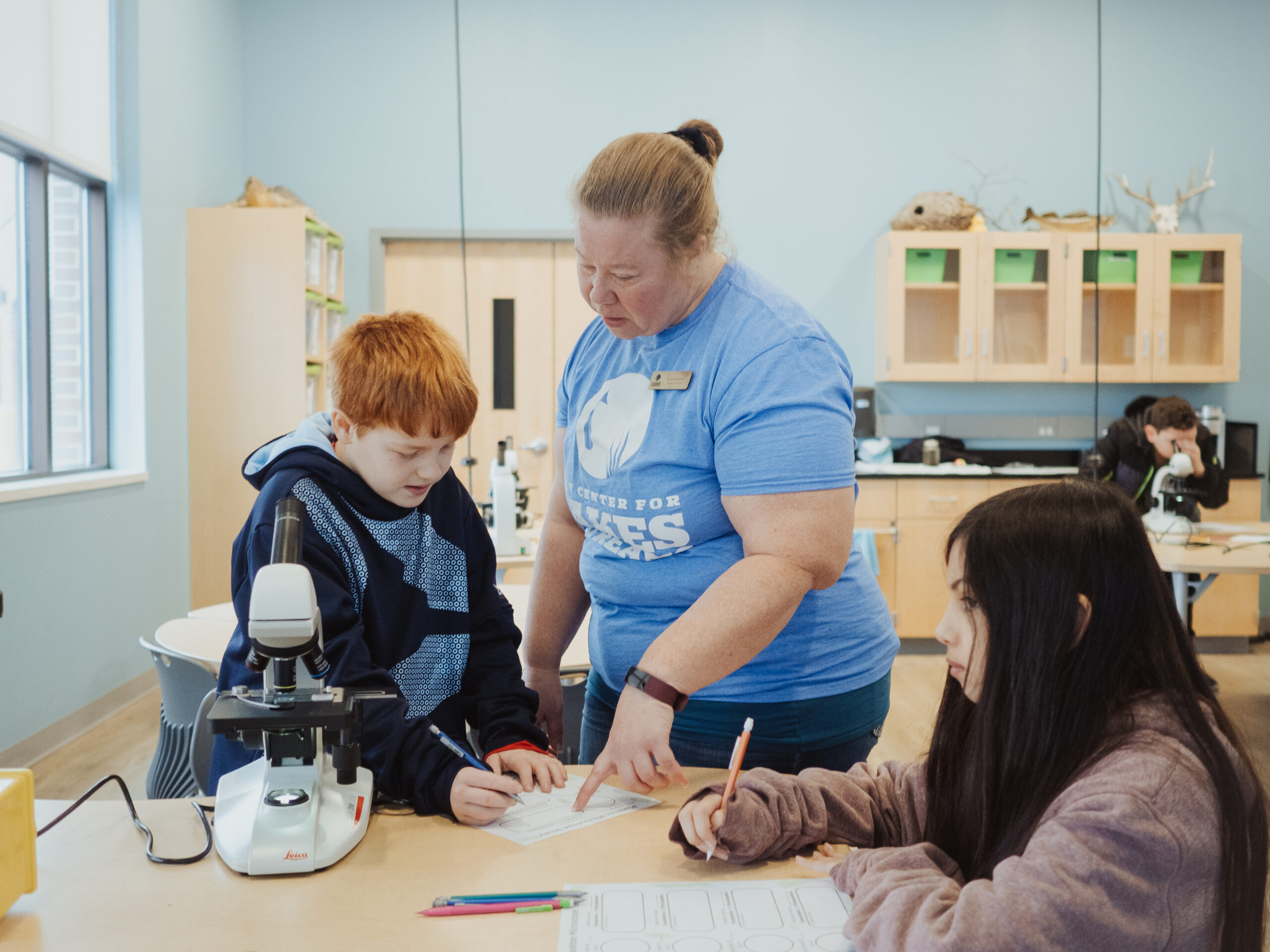
Educating the next generation of water-literate citizens starts today. The Lilly Center makes over 10,000 K-12 student connections annually thanks to a suite of programs that include in-house and destination programming. In addition to the quantity, the Lilly Center’s programs also excel in their quality. In 2025, the Lilly Center’s education programs received the Governor’s Award for Excellence in Environmental Outreach and Education for the second time. Not only do the programs and lessons meet state standards to support teachers, but they are also innovative and hands-on. K-12 students learn about their local lakes through Lake in the Library, Classroom Lake Experience, Lake Adventure Day, and indoor and outdoor field trips. Community education events geared toward adults help folks change behavior today.
Finally, the Lilly Center employs over 45 college interns from Grace College each school year. Almost 200 students have built their resumes at the Lilly Center; about 80% of these college interns pursue environmental professions in Northern Indiana after graduation.
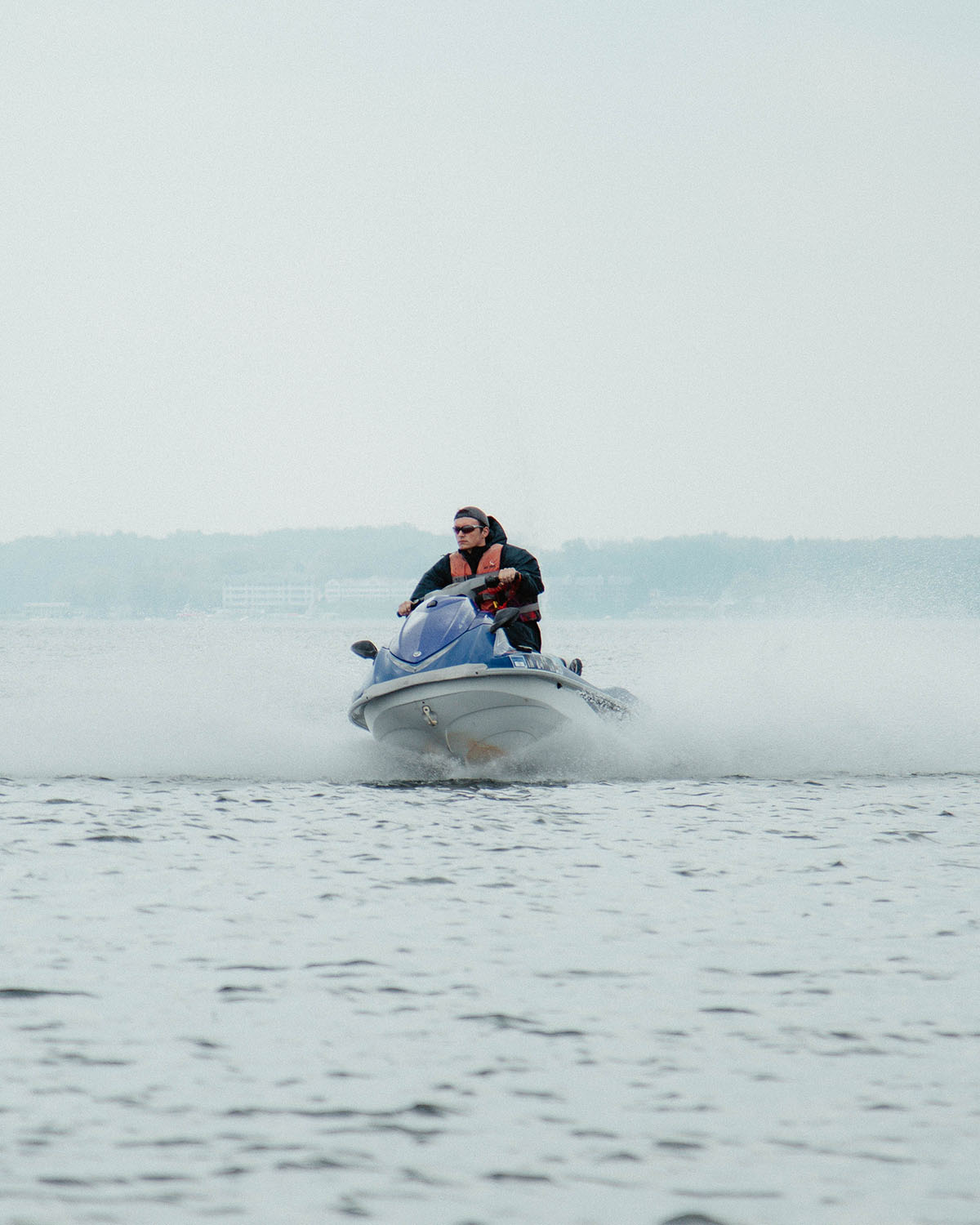
A research study by the Lilly Center found that boating in at least 10 feet of water when creating a wake minimizes the impact on the lake bottom, leaving nutrients undisturbed and unavailable for aquatic plants and algae to use as food. Ongoing research suggests that boating at least 500 feet from shore reduces negative impacts on shorelines. Concerted marketing and education efforts to increase awareness around responsible boating and partnerships with marinas, manufacturers, and lake associations can change behavior in measurable ways and change lake culture.
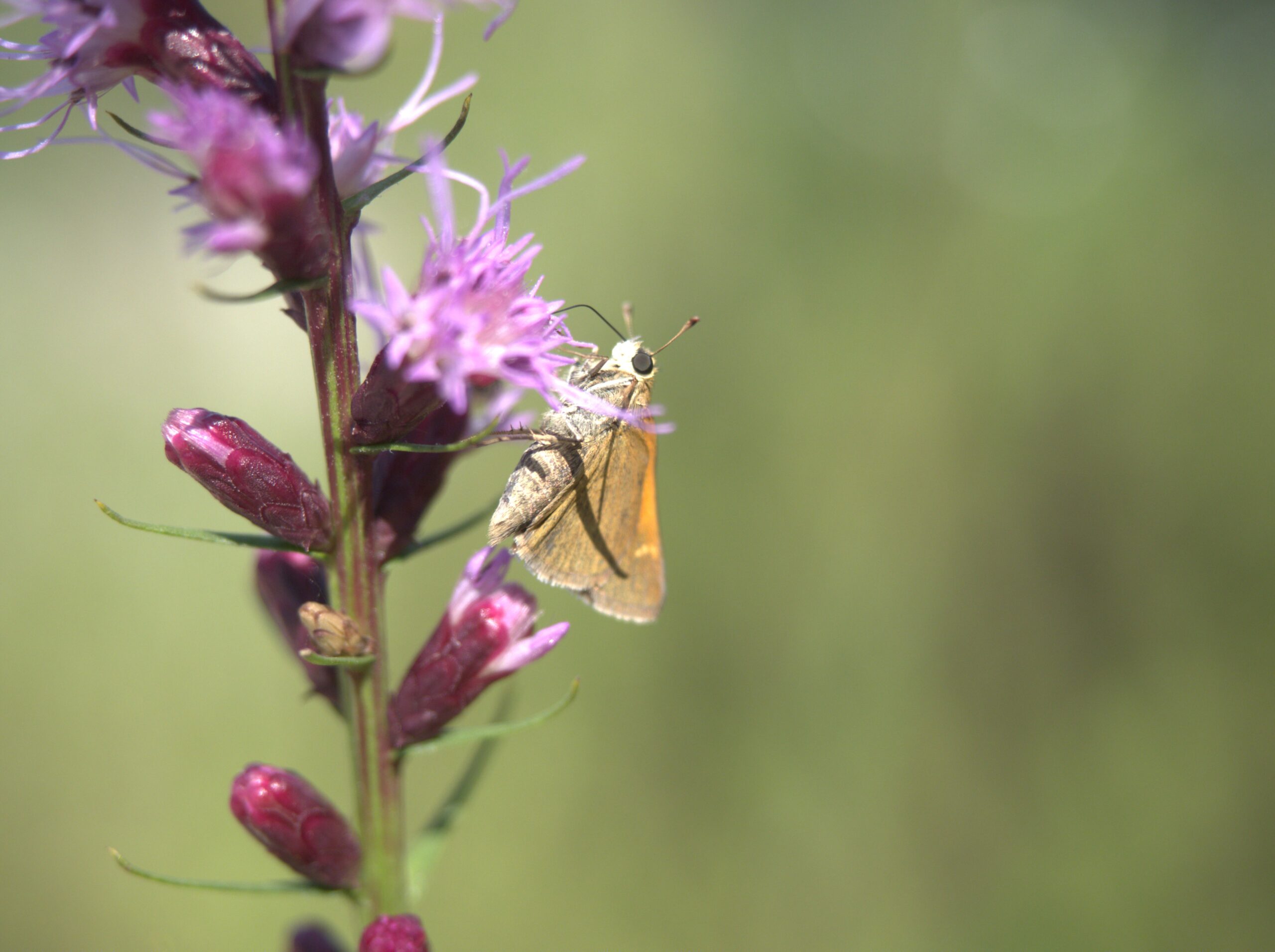
Caring for one’s own property is a tangible way anyone can have an impact on the quality of a lake, regardless of whether that property is on the shore of a lake or within the watershed. Community events, awareness campaigns, and cost-sharing can encourage property owners to install native plant buffers to help retain soil and nutrients rather than allowing them to enter the lake. Additional best practices include composting, proper disposal of yard waste, and using phosphorus-free fertilizer. Campaigns to change behavior now can invigorate support for water quality as the community understands the value a lake provides.
How does Lake Rx work?
Collaboration is at the heart of Lake RX. The health of our lakes can improve substantially by putting more effort behind existing projects or collaborating to create new programs. Together, stakeholders can improve the efficiency and effectiveness of our combined efforts.
By providing expertise, funding, and staffing, the Lilly Center will empower its partners to do more of the good work they already do. Partners include lake associations, environmental nonprofits, local government, state and federal agencies, and other universities.
The Lilly Center envisions implementing a variety of projects over the next five years. Not only will these projects improve local lakes and streams, but they will serve as a model to guide the improvement of waterbodies throughout the state and county.
Funding to seed the first projects is generously provided by Lilly Endowment Inc. Learn more about this exciting announcement below.
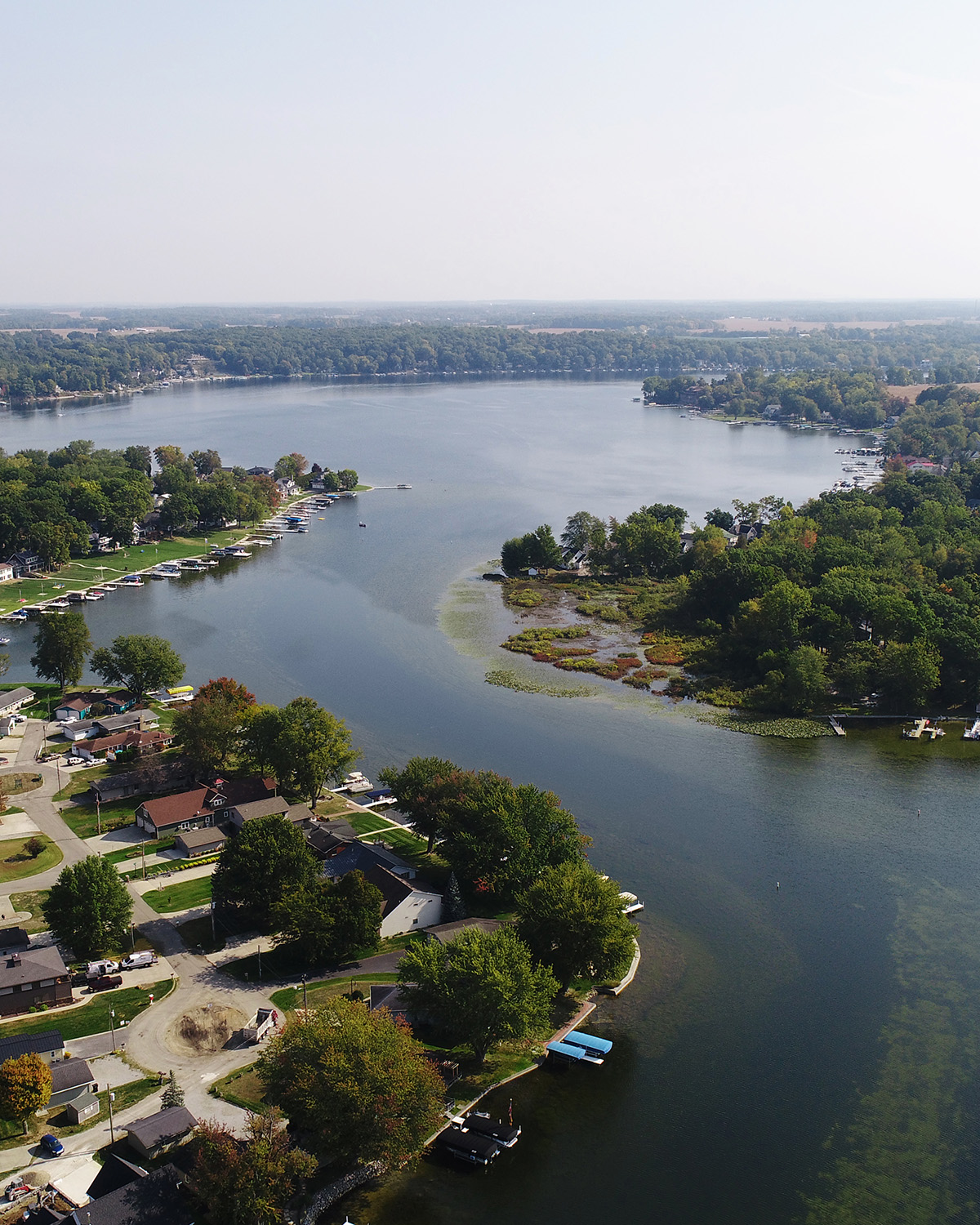
Lilly Center benefits from Lilly Endowment Grant
The Lilly Center is excited to announce that Lilly Endowment has granted $10 million to Grace College to kickstart Lake RX. Learn more by tapping the button below!
The Lake Rx Vision for the Future
By following Lake RX prescriptions, Lilly Center scientists anticipate improvements in the health of local lakes. Outcomes include increased lake access, reduced health threats, and increased economic value. Soon, our lakes could be safe for everyone (including Fido!) to enjoy. We can end the need for algae toxin notifications, free public beaches of E. coli, and enjoy peace of mind on the lake.
Through Lake RX, the Lilly Center offers a compelling vision to revitalize Kosciusko County’s lakes. Together, we can make them clean, healthy, safe, and beautiful.
Receive updates about Lake Rx
Lake RX is an evolving plan based on the best science and recommendations that are available. You can contact the Lilly Center to learn more about how Lake RX can make an impact on your local lake by emailing lakes@grace.edu.